
How to Minimise Void Periods Between Tenancies in London
Japan Sales & Lettings Agency Ltd
Established 1986, London's bilingual Japanese and English property agency. Decades of experience supporting Japanese corporate expatriates with letting, sales and property management.
Every London landlord knows the feeling. One tenancy ends, the keys come back, and the property sits quietly empty while the mortgage, service charge and council tax keep ticking over. This gap between tenancies is called a void period, and while a short one is sometimes unavoidable, a long one is almost always a sign that something could have been planned better. The good news is that voids respond well to preparation. With a little foresight and a calm, organised handover, most gaps can be measured in days rather than weeks.
Why void periods happen in the first place
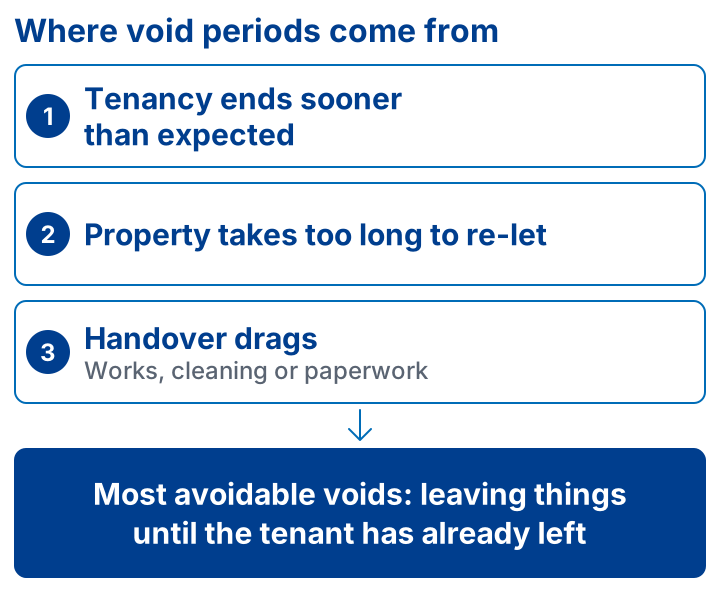
Voids tend to come from one of three places: a tenancy ending sooner than expected, a property that takes too long to re-let, or a handover that drags because of works, cleaning or paperwork. London adds its own rhythm on top of this, with corporate moves, school terms and seasonal demand all shaping when tenants look. The aim is not to eliminate every empty day, which is unrealistic, but to remove the avoidable ones. Most avoidable voids come down to leaving things until the current tenant has already left.
Start re-marketing before the property is empty
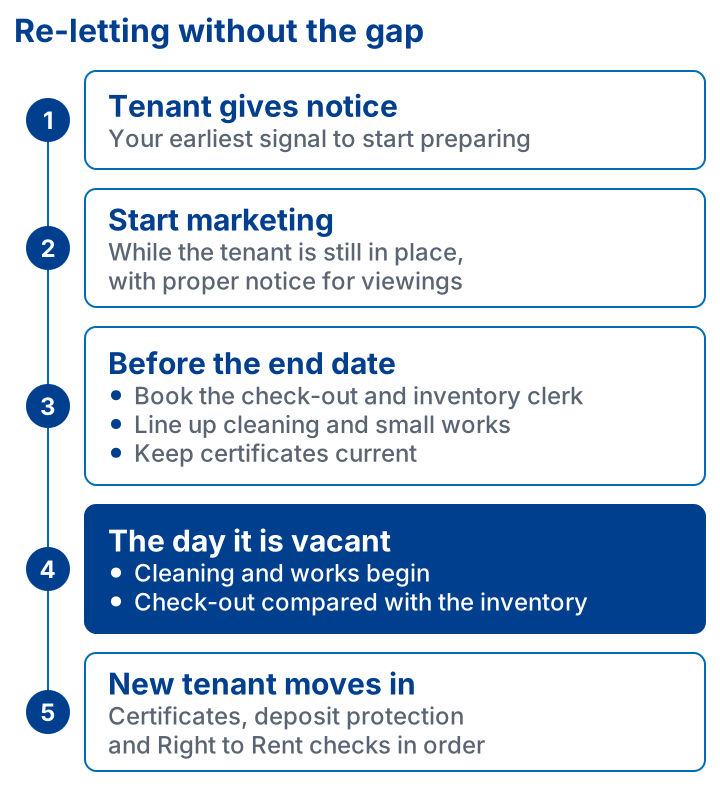
The single biggest lever you have is timing. If you wait until a tenancy ends before advertising, you have built a gap into the process from the start. In practice, you can begin marketing while the current tenant is still in place, provided you give proper notice for viewings and treat the existing tenant with courtesy. A good letting agent will manage the whole re-let process, from photography and portal listings to arranging viewings around the outgoing tenant's schedule, so the new tenancy can begin soon after the old one ends.
Under the Renters' Rights Act 2025, tenancies are periodic and roll month to month, so you will not always have a fixed end date far ahead. That makes open communication with your current tenant more valuable than ever, because their notice is often your earliest signal to start preparing.
Keep good tenants for longer
The cheapest void is the one that never happens, and the simplest way to avoid a void is to keep a reliable tenant happy. Responsive maintenance, fair treatment and sensible, well-handled rent reviews all encourage tenants to stay. Remember that under the current rules a rent increase can happen only once a year, must be served by a Section 13 notice with at least two months' written notice, and can be challenged by the tenant at the First-tier Tribunal. The Tribunal cannot set a rent higher than the figure you proposed. A measured, well-evidenced approach to rent tends to protect occupancy far better than pushing for the maximum every year.
If you want a deeper view of how the new framework shapes day-to-day decisions, our guide to the Renters' Rights Act 2025 for London landlords walks through what has changed and what it means for retention.
Price the property to let, not to linger
A property advertised slightly ahead of the market can sit unseen for weeks, and every empty week usually costs more than a modest adjustment to the asking rent would have. London renters compare a lot of options quickly, so an accurate, evidence-based asking figure generates more enquiries and faster decisions. Remember too that rental bidding is no longer permitted: you must advertise an asking rent, and you cannot invite or accept offers above it. That makes getting the advertised figure right at the outset more important than ever, because there is no headroom to be made up later.
Have your compliance ready well before handover
Nothing stalls a move-in like paperwork that is not ready. Before a new tenancy can start you will typically need a valid EPC, which must be at least rating E to let, a current Gas Safety Record where there is gas, and an EICR, which is required at least every five years. Smoke alarms should be fitted on every storey and a carbon monoxide alarm in any room with a fixed combustion appliance. Keeping these certificates current, rather than scrambling for them at handover, removes one of the most common causes of a delayed start.
The same applies to the new tenant's checks. Right to Rent immigration checks must be completed before letting, and referencing takes time. Encouraging applicants to prepare early helps; our overview of the documents a tenant needs to pass referencing is a useful thing to share, and our explainer on how tenant referencing works sets expectations on both sides so the process does not become the bottleneck.
Run a clean, fast handover
The period between one tenant leaving and the next arriving is where days quietly disappear. A check-out report compared against the check-in inventory tells you quickly what, if anything, needs attention, and any deductions from the deposit must reflect genuine damage beyond fair wear and tear, never betterment. If cleaning, minor redecoration or small repairs are needed, lining up those trades before the outgoing tenant leaves means the work can begin almost immediately rather than after a week of phone calls.
A short checklist of handover essentials helps keep things moving:
- Book the check-out and the inventory clerk well ahead of the end date
- Schedule cleaning and any small works to start the day the property is vacant
- Confirm certificates and the deposit protection are in order before the new tenant moves in
Cast a wider net for the right tenant
Voids also shorten when your pool of suitable applicants is larger. Marketing across the major portals, clear photography and an honest, complete listing all help, and so does understanding the segments who are actively looking in your area. Relocating households moving to London for work are one such group, and our note on attracting Japanese corporate tenants in London looks at one segment among many that values a well-presented, professionally managed home. The principle is the same whoever your tenant turns out to be: treat every applicant equally and on the same terms, in line with the law, and let the strength of the property and the process do the work.
If you would like to refine your wider approach, our guidance on how to find good tenants in London brings these threads together.
A quick word on planning the calendar
London demand ebbs and flows with the seasons, school terms and corporate moving patterns. You cannot control these entirely, but you can plan around them by being ready to market the moment a tenant gives notice, rather than treating every re-let as a standing start. The landlords who suffer the fewest void days are rarely the ones with the cheapest rents; they are the ones who prepare early, keep good tenants and handle the handover calmly.
Void periods will never disappear completely, but they are one of the most controllable costs a landlord faces. Re-market early, look after the tenants you have, price sensibly, keep your compliance current and run a tidy handover, and most gaps will close to a matter of days. If you would like a hand getting the timing and the paperwork to line up, we are always happy to talk it through. For a fuller picture of the lettings process from start to finish, our complete guide to letting a property in London is a good place to begin.
This article is general information and not legal or tax advice. The rules under the Renters' Rights Act 2025 and related compliance and tax obligations depend on your circumstances, so please take advice on your own situation before acting.
Need help with your property?
Our bilingual team is here to assist with all your property needs in London.