
What Is the Deposit Protection Scheme in England?
Japan Sales & Lettings Agency Ltd
Established 1986, London's bilingual Japanese and English property agency. Decades of experience supporting Japanese corporate expatriates with letting, sales and property management.
Most landlords take a deposit at the start of a tenancy as security against unpaid rent or damage. What many newer landlords do not realise is that, the moment that money changes hands, a set of legal duties is triggered. A deposit in England cannot simply sit in your own bank account unprotected; it must be covered by a government-approved scheme within a set timescale. This guide explains what those schemes are, how they work, and the practical steps that keep you on the right side of the rules.
What a deposit protection scheme actually is
A deposit protection scheme is a government-approved arrangement that holds or insures a tenant's deposit during the tenancy. Its purpose is to make sure the money is kept safe and that any dispute over deductions at the end of the tenancy is settled fairly, rather than left to the landlord's word against the tenant's. The scheme acts as a neutral third party.
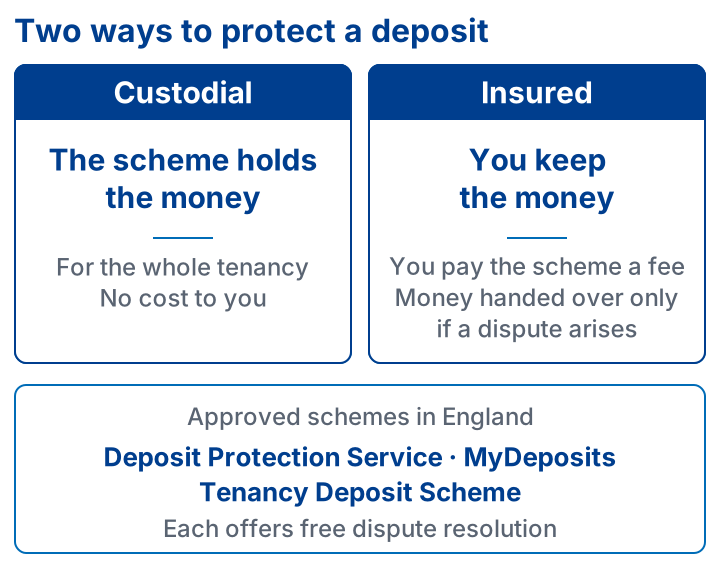
In England there are three government-approved schemes: the Deposit Protection Service, MyDeposits and the Tenancy Deposit Scheme. Each is authorised to protect deposits, and each offers a free dispute resolution service if you and your tenant cannot agree on deductions when the tenancy ends.
Custodial versus insured: the two ways to protect
The schemes broadly work in one of two ways, and it helps to understand the difference before you choose.
- Custodial: you pay the deposit into the scheme, which holds the money for the duration of the tenancy at no cost to you
- Insured: you keep the deposit yourself but pay the scheme a fee to insure it, with the money handed over only if a dispute arises
Neither approach is automatically better; it depends on whether you would rather hand the money over for safekeeping or retain it and pay for cover. What matters is that one of these routes is used, and used on time.
The rules you must follow
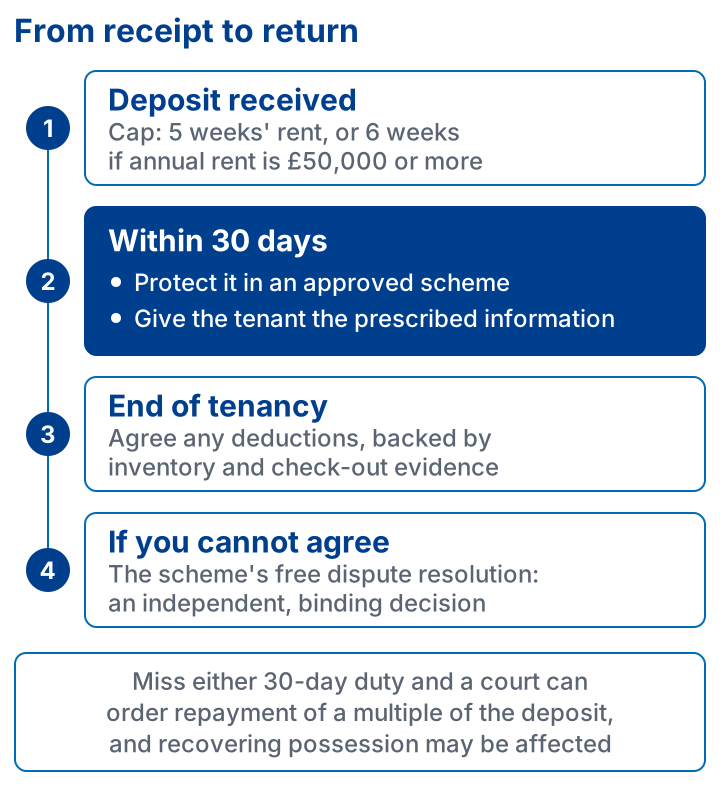
There are two non-negotiable duties once you receive a deposit. First, you must protect it in one of the approved schemes within 30 days of receiving it. Second, within that same window you must give the tenant the prescribed information: the details of where the deposit is protected, how to get it back, and what to do if there is a disagreement.
It is also worth knowing how much you are allowed to take. Deposits are capped at five weeks' rent where the annual rent is under £50,000, or six weeks' rent where the annual rent is £50,000 or more. Taking more than the cap is not permitted, so it pays to do the calculation carefully before the tenancy begins. This deposit cap sits alongside the wider ban on charging tenants fees such as referencing or admin, so the deposit and the first month's rent should be the only money you ask for at the outset.
Why getting it wrong is costly
Deposit protection is one of the areas where the penalties are real and the rules leave little room for argument. If you fail to protect a deposit, or fail to serve the prescribed information, a tenant can take you to court. The consequences can include being ordered to repay a multiple of the deposit, and your ability to recover possession of the property may be affected until the position is put right.
Because the rules around possession changed significantly under the Renters' Rights Act 2025, keeping every part of your paperwork in order, deposit protection included, matters more than ever. A small administrative slip at the start of a tenancy can become a serious obstacle later. Deposit protection is one item on a longer list of legal obligations every landlord should know, which is why it is worth building into a routine rather than treating it as an afterthought.
At the end of the tenancy
When a tenancy ends, you and your tenant agree how much of the deposit should be returned. If you want to make deductions, for unpaid rent or damage beyond fair wear and tear, you should set out clearly what you are claiming and why, supported by your inventory and check-out evidence.
If you cannot agree, the scheme's free dispute resolution service can step in. An independent adjudicator looks at the evidence from both sides and makes a binding decision. This is where good records, a clear inventory and dated photographs earn their keep, because the adjudicator can only decide on what is put in front of them.
How this fits with your other duties
Deposit protection rarely sits on its own. It tends to come up at the same time as the other compliance steps that let you market and let a property safely, such as a valid Energy Performance Certificate and an up-to-date gas safety record. Treating these as a single checklist at the start of every tenancy is the simplest way to avoid gaps. If you are letting for the first time, our complete guide to letting a property in London walks through how all of these pieces fit together.
A short note
The information here is a general summary of how deposit protection works in England, not legal advice, and individual situations vary. If JSLA manages your property, deposit protection and the prescribed information are handled for you as part of the service, with the records kept so you are covered if anything is ever queried. If you self-manage or let on a Let Only basis and would like us to check where you stand, please do get in touch and we will look at it with you.
Need help with your property?
Our bilingual team is here to assist with all your property needs in London.